The phrase 出入平安 means "safe journey" but its literal translation "in and out safely" creates an inappropriate double meaning that makes it unsuitable as a tattoo.
The Story
出入平安 (chū rù píng ān) is a common Chinese blessing you'll see on taxi dashboards, truck mirrors, and home doorways. It literally means "go out and come in safely" – a wish for safe travels and return.
Sounds lovely, right? Perfect for a tattoo for someone who loves to travel?
Wrong.
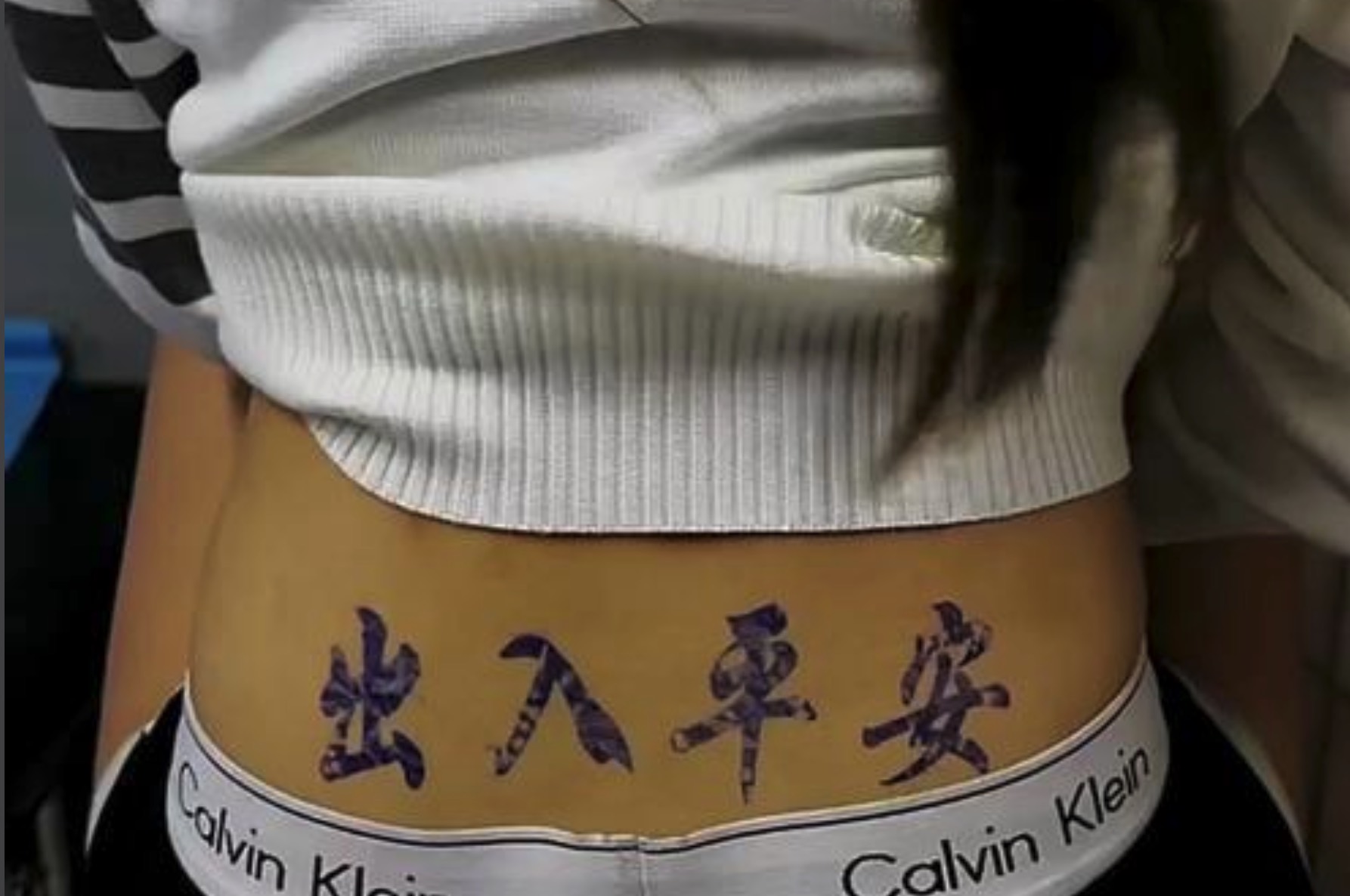
The Linguistic Breakdown
Let's look at the literal meaning:
- 出 (chū) = Go out / Exit
- 入 (rù) = Come in / Enter
- 平安 (píng ān) = Peace / Safety
Together: "In and out safely" or "Exit and enter peacefully."
In Chinese culture, this phrase is only used for vehicles and buildings – things that have doors you physically enter and exit. It's never used for people, especially women.
The Sexual Innuendo
When tattooed on a human body, especially a woman's body, the phrase takes on an entirely different meaning:
"In and out safely" becomes a crude reference to sexual intercourse – specifically, enjoying the act while avoiding pregnancy.
This interpretation is so obvious to native Chinese speakers that seeing this tattoo on someone (especially near the lower back or thighs) causes immediate awkwardness.
Why AI Translation Failed
AI translators like Google Translate, ChatGPT, and DeepL will confidently tell you that 出入平安 is:
"A completely positive phrase with no negative, sexual, or violent connotations. In Chinese context, no one would interpret it negatively."
This is dangerously wrong.
AI translation fails for Chinese tattoos because:
Slang & Double Meanings – AI doesn't know that "出入" (in and out) has obvious sexual connotations in modern Chinese slang. It only reads dictionary definitions.
Context Blindness – This phrase is exclusively for vehicles and buildings, never for human bodies. AI has no concept of this cultural usage boundary.
Body Placement Taboos – The same phrase on a car dashboard versus tattooed on a woman's lower back carries completely different implications. AI cannot understand this.
Living Language – Young Chinese speakers immediately see the innuendo and will laugh or cringe. AI only sees the textbook definition from decades ago.
Tattoo-Specific Culture – What's acceptable as a blessing on a doorway becomes inappropriate when permanently marked on skin. AI has zero awareness of tattoo culture in Chinese society.
The fundamental problem: AI optimizes for literal accuracy, not cultural appropriateness. It cannot distinguish between "technically correct" and "socially acceptable." It will never warn you when a translation is grammatically perfect but culturally disastrous.
This is why Chinese tattoo verification requires human native speakers – people who understand not just the language, but the jokes, the taboos, the generational slang, and the unwritten rules that no algorithm can learn.
Better Alternatives
If you want a travel-related Chinese tattoo, consider:
- 一路平安 (yī lù píng ān) = "Have a safe trip" – This is for people!
- 旅途愉快 (lǚ tú yú kuài) = "Have a pleasant journey"
- 行万里路 (xíng wàn lǐ lù) = "Travel ten thousand miles" (from a famous proverb about learning)
Key Takeaways
- Context matters enormously in Chinese
- Phrases for objects don't transfer to people
- Body placement can amplify inappropriate meanings
- Native speaker review catches what translators miss
The Cost of Not Verifying
Laser removal for a 4-character tattoo: $1,500-4,000 (multiple sessions required).
Our verification service: $19.90.
Don't become a walking joke. Verify before you ink.